Overthinking is not a weakness it’s simply a habit. And like any habit, it can be changed with awareness, practice, and consistent small steps.
You don’t need to eliminate every overthinking moment overnight. Start with one or two of these simple tips and practice them daily. Over time, your brain learns a new pattern — one where clarity replaces confusion and action replaces hesitation.
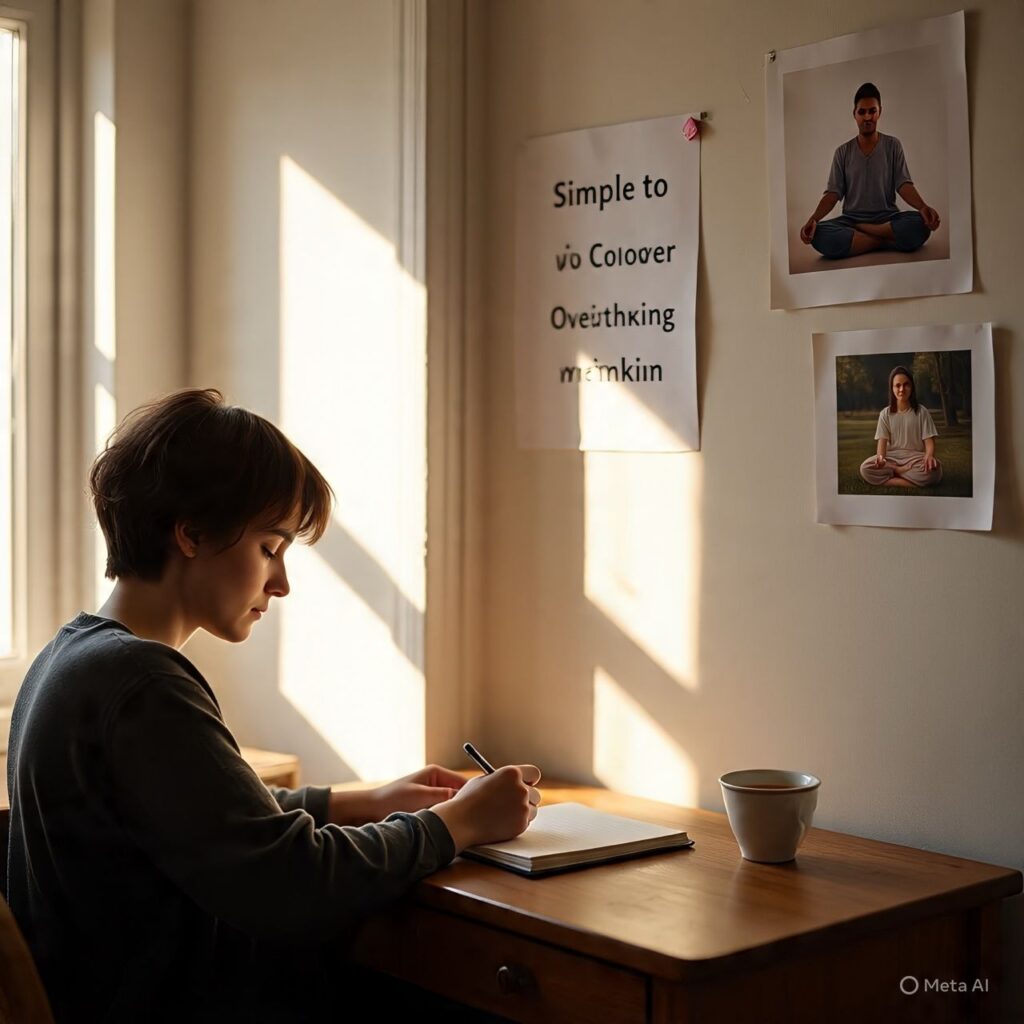
Do you ever replay the same situation in your mind again and again, until you feel stuck? Maybe it was a conversation at work, a decision you had to make, or even a simple email you sent. Instead of moving forward, you keep looping the “what ifs” in your head.
You’re not alone. Overthinking is something almost everyone struggles with at some point. It drains your energy, delays decisions, and creates unnecessary stress. The more you think, the less you act and the cycle keeps repeating itself.
But here’s the good news: breaking free from overthinking doesn’t require complicated psychology tricks or years of meditation training. The truth is, there are simple, practical steps you can take to calm your mind, make better decisions, and live with more peace.
Ways To Stop Overthinking
Before we talk about solutions, let’s first understand why overthinking is such a problem. On the surface, it feels like you’re just “being thorough” or “analyzing carefully.” But in reality, overthinking often does more harm than good.
Here’s what really happens when you get stuck in the cycle
Paralysis of analysis- You spend more time thinking than doing. You get trapped in endless “what ifs” and rarely take action.
Stress and anxiety- Overthinking triggers worry, self-doubt, and unnecessary stress, leaving you emotionally drained.
Wasted mental energy– The more you think about the same issue, the less brainpower you have left for what truly matters.
Missed opportunities– Because you’re stuck analyzing, you delay decisions, which can cause you to lose out on chances or make poor choices.

Overthinking convinces you that you’re being productive, but in reality, it’s the opposite. Instead of clarity, it gives confusion. Instead of confidence, it creates doubt. And instead of progress, it keeps you stuck.
How to Overcome Overthinking in Simple Steps
So, how do you break free? The first step is understanding that overthinking won’t stop by force. Telling yourself “I need to stop overthinking” only makes you think about it more.
The real solution is to shift your mindset and create mental clarity. Here’s the simple three-step process to break the cycle.
Awareness – Start noticing when you’re overthinking. Awareness is half the battle. If you can catch yourself spiraling, you can take back control.
Interrupt – Don’t let the thought loop continue. Shift your focus to something constructive, like movement, deep breathing, or writing it down.
Replace – Redirect your thoughts into action. Instead of asking “what if it goes wrong?” ask “what can I do right now to move forward?” Think of overthinking as quicksand. The more you struggle, the deeper you sink. But with awareness, interruption, and redirection, you give yourself a rope to climb out.
Practical Tips: How to Overcome Overthinking in Simple Steps
Theory is helpful, but what you really need are practical, everyday actions you can take to quiet the noise in your head. Here are eight powerful, science-backed techniques to help you break the habit of overthinking.
Name It to Tame It
The next time you catch yourself spiraling, pause and say: “I’m overthinking right now.” By naming it, you reduce its emotional power. Awareness creates distance between you and the thought, which helps you regain control.
Set a Thinking Timer
Give yourself permission to think but with boundaries. Set a timer for 5–10 minutes, allow yourself to analyze, and then make a decision. Once the timer goes off, commit to moving forward instead of revisiting the thought loop.
Write It Down
Journaling or doing a brain dump works wonders. Get all your thoughts onto paper without judgment. Once they’re out of your head, you’ll find they’re far less overwhelming. Plus, writing helps you organize your thoughts into clarity.
Shift to Action
Overthinking thrives in inaction. Break the cycle by asking yourself: “What’s one small step I can take right now?” Then do it. Even tiny actions like sending that email or making that call reduce mental clutter instantly.
Practice Mindfulness
This point is going to play very important role in many situations. Mindfulness isn’t about sitting cross-legged for an hour. It can be as simple as taking three deep breaths, walking in nature, or focusing on your senses for a few minutes. This brings your attention back to the present moment and calms the storm in your head.
Fuel Your Inputs with Positive Thoughts
Your mind reflects what you feed it. If you’re consuming endless news, social media drama, or negative conversations, you’re giving fuel to overthinking. Be intentional with your inputs — less noise means less mental clutter.
So here’s my challenge for you: for the next 7 days, try these simple steps whenever you catch yourself overthinking. Write it down, set a timer, or take that one small action. Watch how your stress lowers, your decisions become easier, and your life feels lighter. Remember, the goal isn’t to control every thought — it’s to stop letting your thoughts control you. And that’s exactly how to overcome overthinking in simple steps.
Today’s Inspirations,
S Shekhar
Writer & Travel Enthusiast
“Dream, explore, write, repeat!”